Goal, functional unit and system boundary
Define why the study is being undertaken, what performance is compared and which life-cycle stages and processes are included.
Life Cycle Assessment (LCA) evaluates environmental impacts associated with a defined product, process or building system across selected life-cycle stages.
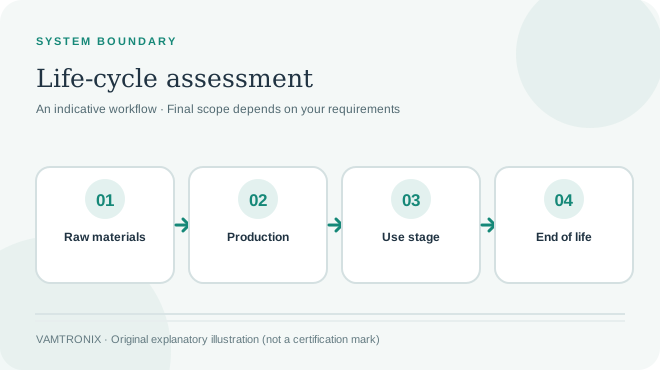
Clarify intended use, functional unit, system boundary and assumptions.
Gather and organize material, energy, transport and process inputs and outputs.
Assess selected environmental indicators using a suitable methodology and data sources.
Identify important contributors, limitations and areas for improvement.
We can discuss the objectives, information available and the most useful next step.
Enquire about Life Cycle Assessment ↗
Clear decisions about purpose and boundaries make life-cycle results more credible and useful.
Illustrative consultancy outputs. The final engagement scope and responsibilities are agreed for each project.
Define why the study is being undertaken, what performance is compared and which life-cycle stages and processes are included.
Compile material and energy flows, transport and end-of-life assumptions, data sources, cut-offs and limitations.
Use suitable methods, test sensitivity where relevant, and report limitations; comparative public claims can entail additional ISO requirements.
Useful introductory information, not a substitute for checking current scheme requirements.
Not always. LCA may evaluate multiple environmental impact categories; a carbon footprint focuses on climate-change-related impacts.
Comparisons require consistent functional units, boundaries, quality and methods. Public comparative claims can trigger additional review requirements.
Project enquiry
Share enough information for a meaningful first discussion. Fields marked * are required.
Tell us what you're working on. We'll help identify the right next conversation.